
"Burundi coffee exports"
300 article(s) found

Introduction of Burundian Coffee single Bean Flavor description Variety planting Development History production area treatment method
Professional baristas Please follow the Coffee Workshop (Wechat official account cafe_style) Burundian Coffee A rich, soft-tasting coffee from the war-torn areas Burundi (Burundi) has the most diverse and successful coffee industry in the world and has its own characteristics. Coffee in this country was introduced by Belgian colonists in 1930 and is now grown only on small farms. No.

A brief introduction to the market price of Burundian boutique coffee beans with excellent acidity
Burundian coffee market: most of Burundi's coffee products are exported to the United States, Germany, Finland and Japan. Lake Tanganyika is longitudinally striped from north to south, 670km long and only 48-70km wide from east to west. It is the narrowest lake in the world, with a surface area of about 32900 square kilometers. It is the second largest lake in Africa (the largest lake is Lake Victoria L.Victoria), with an elevation of the lake.

Evaluation of Flavor characteristics of Burundian Coffee beans
Evaluation of Flavor characteristics of Burundian Coffee beans Burundian formerly known as Urundi formed a feudal kingdom in the 16th century. Since the middle of the 19th century, the forces of Britain, Germany and Belgium invaded. The long-ruled monarchy, which was conquered by Germany in 1890, listed it as the territory of German East Africa and fell under the control of the Belgian army in 1916. first

Brief introduction to the treatment method of grinding degree and baking degree of Burundian fine coffee beans with almond aroma
Suggested roasting method: moderate to deep roasting ★★: good market for Burundian coffee: Burundian coffee products are mostly exported to the United States, Germany, Finland and Japan, Burundi in multiple plateaus and mountains, mostly composed of the eastern plateau of the East African Rift Valley, with a national average elevation of 1600 meters, known as a mountain country. According to the topography of Burundi, it can be divided into three regions: the western plain.

The history of Burundian coffee, the taste of Burundian coffee
Following Caf é (official Wechat account vdailycom) found that Burundian Coffee has opened a small shop of its own. Burundian coffee was introduced by the Belgians in the 1930s and has been planted for more than 70 years. It now covers an area of about 60, 000 hectares, mainly in the form of family farmers. At present, nearly 800000 farmers in Burundi are engaged in coffee cultivation. The main kinds of coffee in Burundi

Introduction to the method of variety treatment in Burundian coffee bean flavor description grinding scale production area
Burundian coffee bean flavor description grinding scale production area variety treatment method after the price of Burundian Arabrica coffee was raised, the purchase price of fresh coffee fruit in Burundi was adjusted from 120 Burundian francs / kg to 200 Burundian francs / kg, which is excellent news for countries where coffee export income accounts for more than 80% of the total foreign trade export income.

History, culture and taste characteristics of Burundian coffee
Following Ka Pai (Wechat official account vdailycom) found that the Beautiful Cafe opened a small coffee shop of its own and came to Burundi at the end of the 20th century during the Belgian colonial period. Since 1933, each farmer has been required to take care of at least 50 coffee trees. When Burundi became independent in 1962, coffee production began to become private; in 1972, it became state-run with the change of political situation; since 1991

Introduction of Burundian boutique coffee bean flavor and taste manor producing area
There are many problems in the economic and social development of Burundi. Among them, first, due to the limited bride price in the country, the smooth implementation of the development plan for Burundi depends to a large extent on external support; second, due to the lack of high-quality personnel and necessary equipment, administrative efficiency is still underground; third, the market lacks transparency; fourth, there are not many commodities available for export; fifth, infrastructure.
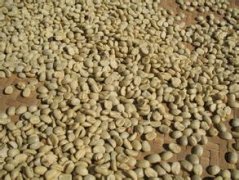
A brief introduction to the description of the flavor, taste and aroma characteristics of fine Burundian coffee beans with mellow taste
Burundian coffee market: most of Burundi's coffee products are exported to the United States, Germany, Finland and Japan. Lake Tanganyika is longitudinally striped from north to south, 670km long and only 48-70km wide from east to west. It is the narrowest lake in the world, with a surface area of about 32900 square kilometers. It is the second largest lake in Africa (the largest lake is Lake Victoria L.Victoria), with an elevation of the lake.

Introduction of Burundian Coffee Flavor, characteristics and producing areas
Characteristics of Burundi Coffee: Burundi (Burundian) has the most diverse and successful coffee industry in the world, and has its own characteristics. Burundian coffee is fragrant and has excellent acidity. Flavor: mellow taste, rich aroma, excellent acidity suggested baking method: medium to deep roasting ★★: good Burundian coffee market: Burundian coffee
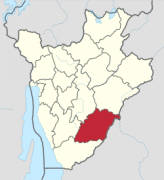
What are the taste characteristics of Burundian coffee beans, Heart of Africa? Challenges to the coffee industry in Burundi
Burundi is a small mountainous landlocked country in east-central Africa located between Rwanda Tanzania and the Democratic Republic of the Congo. East Africa is famous for producing quality coffee, and Burundi is no exception. Although the production here is very small compared with other African countries, coffee farmers in Burundi pay great attention to detail. Burundi has the second highest per capita GDP in the world and is considered to be

Burundian Coffee Flavor with Fruit Flavor introduction to the characteristics of Fine Coffee beans in Manor area
According to the Central Bank of Burundi, Burundi's imports and exports in 2012 were 1.27835 trillion Brown (about 886 million U.S. dollars), of which imports totaled 1.08505 trillion Brown (about 751 million U.S. dollars) and exports totaled 194.3 billion Brown (1.34 U.S. dollars). The annual trade deficit is 8897.5 Brown (about $616 million). [12] outward investment began in the early 1990s

Burundian boutique coffee Heart of Africa Burundian Heart of Africa Coffee introduction
Professional Coffee knowledge Exchange more information about coffee beans Please note the coffee workshop (Wechat account cafe_style) Front Street-Burundi Heart of Africa Burundi, the heart of Africa. According to the statistics of the World Bank in 2011, there are about 600000-800000 families living on coffee in Burundi, and coffee is the core of Burundi. Burundi is a

Burundi (Burundi) "Heart of Africa" planting history and flavor towards Burundian coffee
Burundi (Burundi) "Heart of Africa" planting history and flavor towards Burundian coffee delicious? Production area: Mulamua province (Muramuya), Rutegama producing area producer: Nialunasi Cooperation (NyarunasiCooperative) varieties: Bourbon altitude: 1400 m to 1700 m soil: volcanic rock soil grade: AA grade treatment method: washing harvest time

Introduction of Burundian Coffee coarse Powder how to drink characteristic Variety Flavor description Grinding Calibration method
Introduction to Burundian coffee producing area: Burundian (Burundi) coffee is now grown only on small farms. Almost all coffee produced in Burundi is Arabian coffee beans, while coffee trees in Ngozi are planted at an altitude of more than 1200 meters. Features of Burundian coffee: Burundian (Burundi) has

Aromatic Burundi Fine Coffee Bean Origin History and Culture
Burundi has two main ethnic groups, the Tutsi, who number only about one and a half, have ruled the country since the sixteenth century and control a civilian population composed mainly of Hutu, plus a very small indigenous population of Twa. This abnormal social structure in which ethnic minorities occupy a high position has buried the evil seeds of national instability, and in 1

Bright citrus aromatic Burundi coffee flavor Taste characteristics of the region Variety introduction
Burundi is located south of the equator in central and eastern Africa. It borders Rwanda to the north, Tanzania to the east and south, Congo to the west and Lake Tanganyika to the southwest. There are many plateaus and mountains in the territory, most of which are composed of plateaus on the east side of the Great Rift Valley in East Africa. The average altitude of the country is 1600 meters, which is known as the mountain country. More than half of them are located on the famous Lake Tanganyika.

This paper briefly introduces the characteristic growing environment of Angolan coffee beans, Burundi coffee beans and Cameroon coffee beans.
Professional coffee knowledge exchange more coffee bean information Please follow Coffee Workshop (Wechat official account cafe_style) Angola was once a big coffee producer. In the mid-1970s, Angola (Angola) exported 3.5 million bags of coffee a year, 98% of which was Robex (which may be the best Robbins coffee in Africa). In 1990, total production dropped to 20%.

Burundi Coffee Bean Flavor Burundi Coffee Bean Burundi Coffee Features
Burundi coffee was introduced by Belgian colonists in 1930. Unfortunately, many of these farms are located on the border with war-torn Rwanda, putting pressure on coffee production. Coffee in Burundi: Burundi Coffee is now grown only on small farms. Coffee produced in Burundi is almost exclusively Arabica beans.

A brief introduction to the history and culture of the origin and development of Burundi Luo boutique coffee beans with almond aroma.
Burundi coffee was introduced by Belgian colonists in 1930. Unfortunately, many of these farms are on the border with war-torn Rwanda, putting pressure on coffee production. Coffee production in Burundi: Burundian coffee is now grown only on small farms. Almost all the coffee produced in Burundi is Arabian coffee beans.